


Stocks Look Past Higher Oil
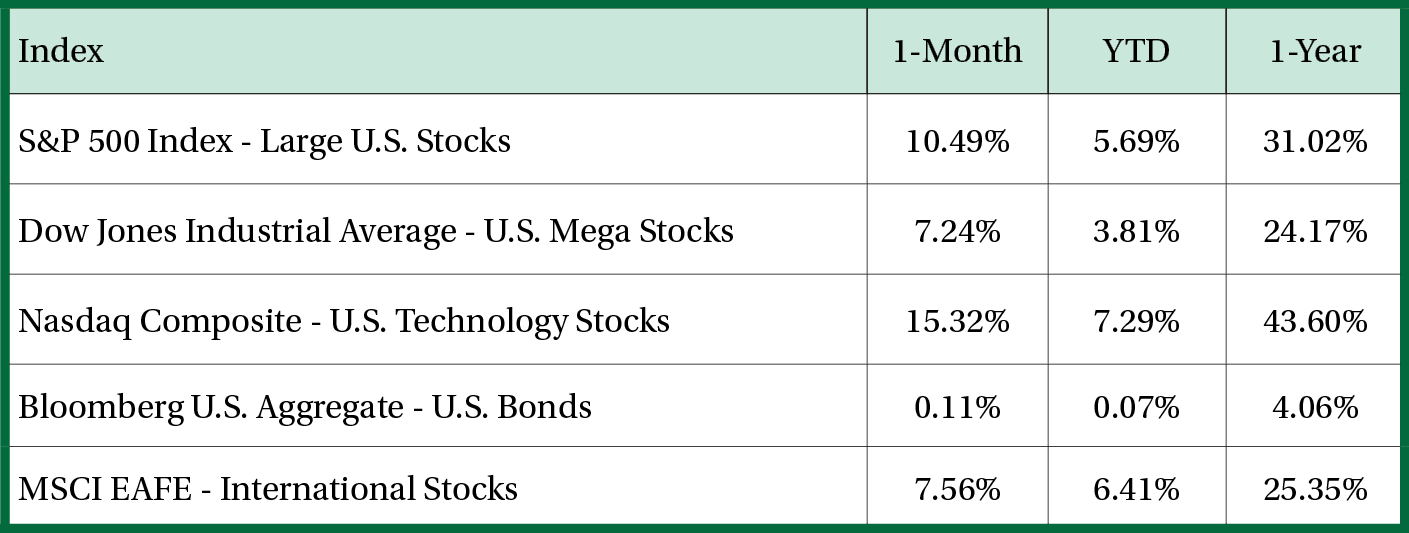
Despite a lack of a long-term resolution for the conflict in Iran and oil prices exceeding $100 per barrel, stock markets returned to an all-time high. The MSCI ACWI IMI index advanced more than 10.2% in April, driven by strong returns in U.S. equity markets (the S&P 500 index had its best month since late 2020). A few reasons for the sharp rally in global equity markets include rising earnings expectations in 2026 and the global economy’s lower reliance on oil. Earnings expectations advanced nearly 4.25% since the end of February for the global stock market, which underscores global corporations’ resilience to global conflicts that affect oil supply. For instance, the amount of oil consumed to generate economic growth has fallen precipitously over the past couple of decades. Put simply, it takes a lot less oil to generate economic growth.
In the Chips
The chip industry is the next group of companies to benefit from artificial intelligence (AI) spending. The Philadelphia Semiconductor index (a representation of U.S. listed semiconductor companies), or SOX index, advanced 38.4% in April. On top of the success for U.S. companies, international exchanges are also benefiting from AI enthusiasm, with technology-focused Taiwan, South Korea, and Japan exchanges reaching all-time highs during the month. The massive upside in markets could have staying-power, compared to past moves in semiconductor rallies as the ultimate end customers are larger corporations whose commitments are more stable and long-term as opposed to consumer-driven products. Semiconductor companies have talked about excess demand over the next three years, which should continue to support these companies and the overall market.
Powell Era Comes to an End
Federal Reserve chair Jay Powell oversaw his last Federal Open Market Committee (FOMC) meeting in April, with the FOMC members agreeing to keep rates unchanged at a level of 3.5% - 3.75%. However, similar to recent meetings, there were a few dissenting opinions to the level and rationale of the decision. Three officials voted against the decision for the inclusion of an easing bias in the statement, while one official dissented in favor of a quarter-point reduction in rates. This is the first time since October 1992 that four officials dissented against a decision. Following the meeting, the market now expects a 0.25% rate hike by April 2027, given the increased divergence in opinion amongst members.
Oil Remains Above $100 per barrel
After a quick reprieve in prices, the price of oil traded in the U.S. and overseas returned to levels reached in March. In fact, the price of Brent crude oil, the global benchmark for oil prices, rose more than 9.7% to trade above $114 a barrel to the highest level since June 2022. Investors are turning more skeptical on the U.S./Iran conflict finding a resolution quickly that would return supply back to the market. From a U.S. perspective, U.S. crude oil exports reached an all-time high above 6 million barrels a day, as overseas investors search for replacements to Middle Eastern oil. Overall exports of U.S. oil and fuel reached an all-time high of 14 million barrels a day. Buyers from Asia have been the marginal buyer of U.S. oil products since the blockade of the Strait of Hormuz.
U.S. Economic Growth Resilience
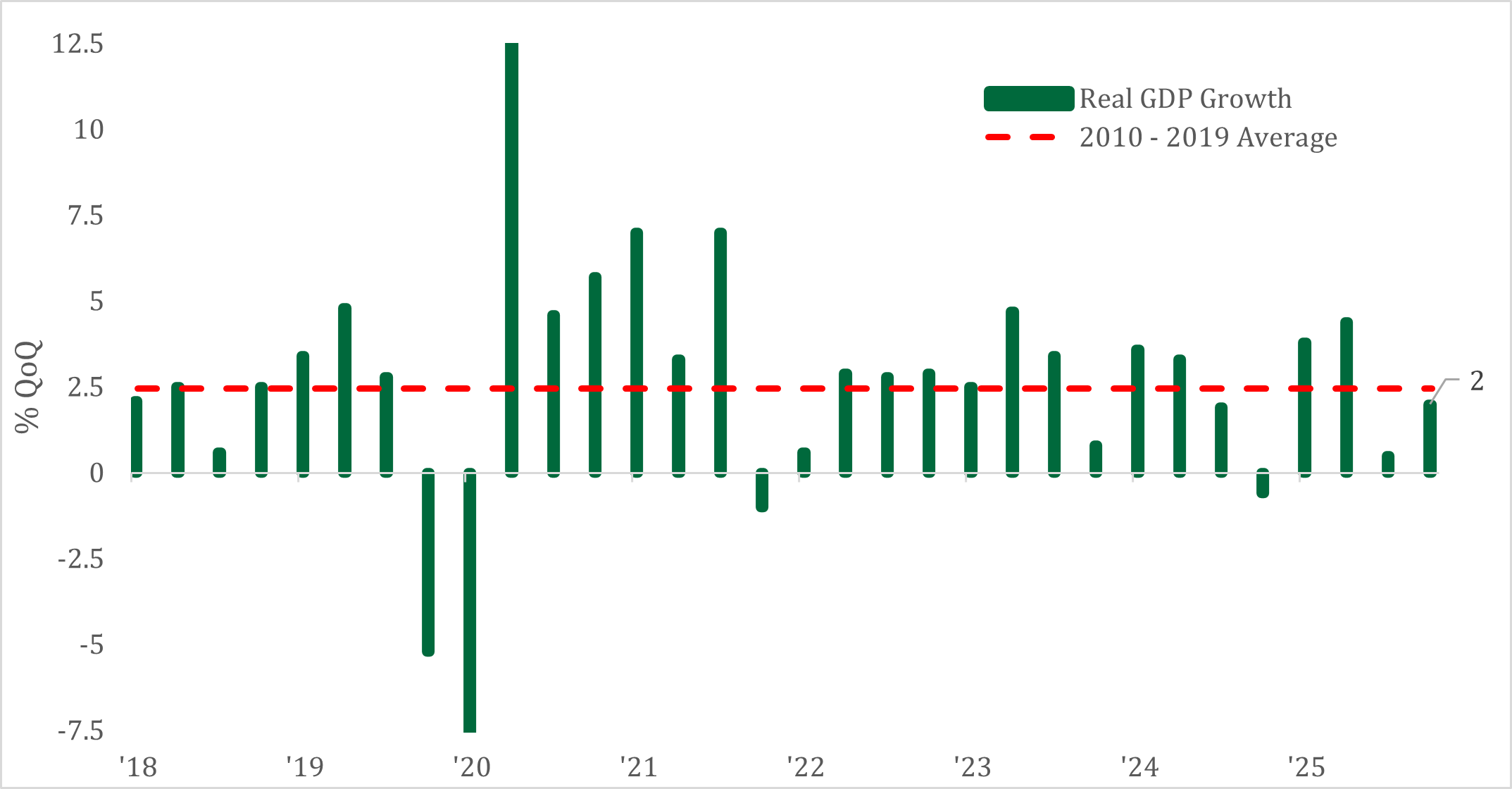
Technology Spending Boosts U.S. Growth
First quarter 2026 U.S. economic growth increased at a 2% annualized rate, on federal expenditures and business investment. The 9.3% rebound in federal expenditures partially reversed the contraction in the previous quarter caused by the government shutdown. Business investment advanced 10% on an annualized basis driven by a 17% increase in equipment services and 13% rise in intellectual property products, reflecting the massive rollout in artificial intelligence models. The most significant component of U.S. economic growth, consumption, saw its growth rate moderate to 1.6% from 1.9% the previous quarter. Consumption activity will likely be monitored going forward as gas prices remain elevated amidst the conflict in Iran.
Although we believe it to be reliable as of the publication date and have sought to take reasonable care in its preparation, all information provided is FOR INFORMATIONAL PURPOSES ONLY and we make no representations or warranties regarding its accuracy, reliability, or completeness and assume no duty to make any updates in the event of future changes. Past performance may not be indicative of future market results. Any examples used (including specific securities) are generic and meant for illustration purposes only and are not, and should not be interpreted as, offers to buy or sell such securities. To the extent indices are referenced, please note that you are not able to invest directly in an index.
Nicolet Wealth Management is a brand name that refers to Nicolet National Bank and certain of its departments and affiliates that provide investment advisory, trust, retirement plan level services, and insurance services. Investment advisory services offered through Nicolet Advisory Services, LLC (dba Nicolet Wealth Management), a registered investment advisor.
All investments are subject to risks, including possible loss of principal, and are: NOT FDIC INSURED; NOT INSURED BY ANY FEDERAL GOVERNMENT AGENCY; AND NEITHER DEPOSITS OR OTHER OBLIGATIONS OF, NOR GUARANTEED BY, Nicolet National Bank or any of its affiliates. Neither Nicolet Advisory Services nor its affiliates offer tax or legal advice. You should consult with your legal and tax professionals before making investment decisions.

Listen & Subscribe to our Podcast
Tune in for the next episode, subscribe or follow us wherever you listen to podcasts.